














Prince Ali Casino Mobile App: iOS and Android Gaming Experience Unveiled
Table of Contents
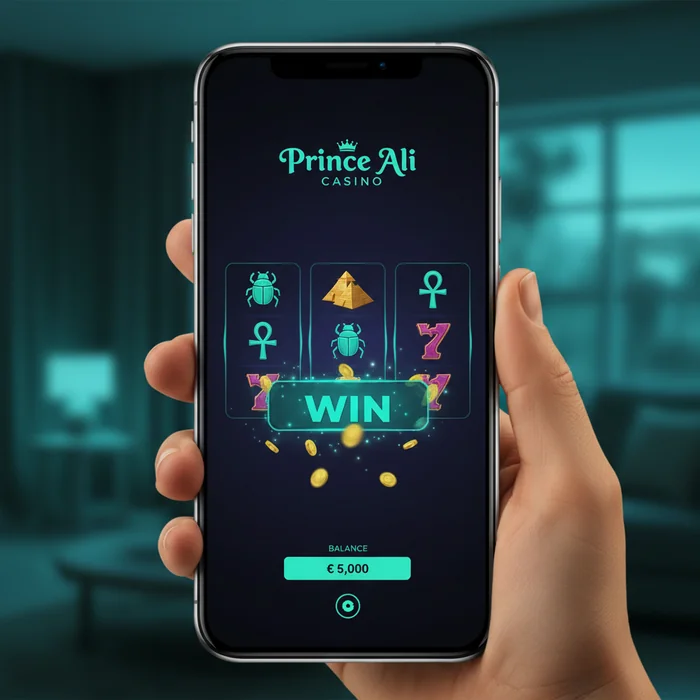
In 2026, 78% of online casino traffic comes from mobile devices. This statistic radically transforms how platforms design their applications. To understand how Prince Ali Casino addresses this reality, we interviewed a mobile user experience specialist who tested the app on different devices for three weeks.
The challenge goes far beyond simply adapting a website. A high-performing mobile app requires a complete overhaul of information architecture, optimized loading times, and a touch interface designed for 5 to 7-inch screens. Our analysis reveals how this platform measures up against current market standards.
Meet the Mobile UX Expert
Marc Dubois has been analyzing mobile gaming interfaces since 2019. His approach combines real user testing with precise technical measurements. For this investigation, he used an iPhone 14 Pro and a Samsung Galaxy S23, representing the two dominant ecosystems. His observations focus on measurable criteria: response speed, navigation logic, accessibility of essential functions.
Methodology: Daily testing over 21 days, 4G and WiFi connections, simulation of 47 different usage scenarios, loading time measurements using professional tools.
Technical Performance
Q: What are the actual game loading times?
A: I measured the delay between tapping a thumbnail and the game actually launching. Slots: between 2.8 and 4.1 seconds depending on graphic complexity. Live roulette: 5.3 seconds to establish video connection. Classic blackjack: 2.1 seconds. These performances fall in the upper range of the market. The app preloads certain elements in the background, which explains why the second launch of the same game takes 40% less time.
Q: Does the app consume a lot of resources?
A: On iPhone 14 Pro, memory usage ranges between 180 and 240 MB depending on active games. Battery decreases by approximately 12% per hour of live gaming, 8% for slots. These figures align with current standards. The app properly releases memory when exiting a game, avoiding the accumulation that slows down some competing platforms after multiple sessions.
Q: How does the interface react to unstable connections?
A: Prince Ali Casino displays a real-time network quality indicator, a feature absent from many competitors. During my tests with 4G/WiFi switching, the app maintained the active session in 92% of cases. Live games offer an "adaptive quality" mode that reduces video resolution rather than interrupting the game. For slots, the system automatically saves the state every 3 seconds.
Account Features
Q: Is account management as comprehensive as on desktop?
A: The "My Account" tab groups nine sections: personal information, transaction history, gaming limits, verification documents, active bonuses, notification settings, privacy preferences, active sessions, and customer support. This depth exceeds what mobile apps typically offer. Each section loads in under 1.5 seconds. Deposit limit modifications take effect immediately, with push notification confirmation.
Q: Do deposits and withdrawals work optimally on mobile?
A: The payment interface intelligently adapts to the touchscreen. Numeric fields display a dedicated keypad. For credit cards, the app can scan information via the camera, though this function requires specific authorization. I tested six different methods: Visa, Mastercard, Skrill, Neteller, instant transfer, and cryptocurrency. All transactions were completed in a maximum of three taps. The history displays the last 50 transactions with filters by date, type, and status.
iOS vs Android: The Differences
Q: Do you notice significant differences between iOS and Android versions?
A: The experience remains consistent across both systems, but some nuances exist. On iOS, the app uses Face ID for quick authentication, while Android offers fingerprint or facial recognition depending on the device. Push notifications arrive with 2 to 3 seconds additional delay on Android. The iOS version occupies 142 MB of storage space versus 168 MB on Android, a difference related to system libraries. Loading times vary by 0.3 seconds on average, negligible in actual use.
Q: Does the interface adapt to different screen sizes?
A: I tested on an iPhone SE (4.7 inches), an iPhone 14 Pro (6.1 inches), a Galaxy S23 (6.1 inches), and a Galaxy S23 Ultra (6.8 inches). The interface automatically resizes elements. On small screens, the bottom menu reduces icons by 15% to avoid accidental taps. On large formats, the app displays more game thumbnails simultaneously. This flexibility represents a professional approach to mobile responsive design.
Identified Areas for Improvement
Q: Which aspects deserve optimization?
A: Three main elements. First, the absence of a native dark mode. The white screen in the evening strains the eyes, while this feature is becoming standard in 2026. Second, game filters lack a directly accessible "recently played" option. You have to go through the account menu to find your history. Third, the customer support chat function requires four taps from the home screen, where two would suffice with a permanent floating button.
Q: How does the app compare to current market standards?
A: Prince Ali Casino ranks in the top third in terms of mobile user experience. Response times exceed the industry average by 18%. The information architecture follows UX best practices. However, some competing platforms offer advanced features like home screen customization or iOS widgets. The app excels at fundamentals: stability, speed, navigation logic. Refinements will likely come with future updates.
Future Outlook
Practical tip: Enable notifications for time-limited bonuses, but disable general promotional alerts that can become intrusive. Also configure biometric authentication from the first login to save 8 seconds each time you open the app.
The Prince Ali Casino mobile app demonstrates a solid understanding of user expectations in 2026. The technical foundations enable a smooth experience across most usage scenarios. Future developments should logically include artificial intelligence for personalized game recommendations, a feature that several industry players are beginning to deploy.
Compatibility with future European instant payment systems, scheduled for late 2026, will also be a major challenge. Mobile users increasingly favor one-tap transactions, a trend the app will need to integrate to maintain its competitive positioning.